On the Occasion of World Press Freedom Day: Civil Coalition Organizes Workshop Titled: “Voices Under Threat: Live Testimonies on Violations of Press Freedom”
Blog post description.
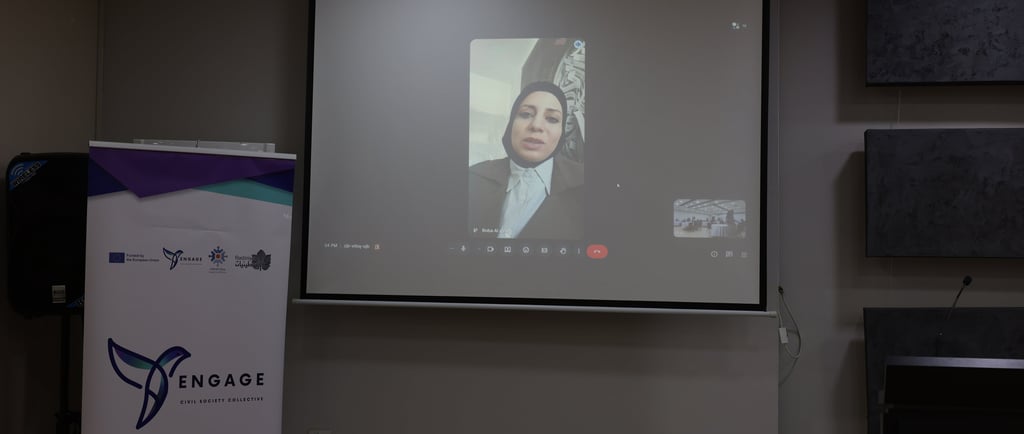
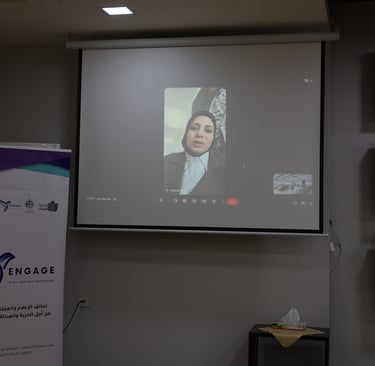
Ramallah – May 8th, 2026. The Civil Coalition for the Protection of Freedom of Expression and Digital Rights in Palestine organized a workshop on Monday, May 4th, 2026, titled “Voices Under Threat: Live Testimonies on Violations of Press Freedom” at the Palestine Red Crescent Society Hall in Al-Bireh. The event was attended by representatives of civil society organizations, human rights and media institutions, and students from media departments at Palestinian universities. The session was moderated by MR. MAJED AROURI from the Palestinian Center for the Independence of the Judiciary and the Legal Profession “MUSAWA”, one of the coalition’s member organizations.
The event was organized as part of the activities of the Engage Project, implemented by Filastiniyat Association in partnership with An-Najah National University and in cooperation with MADA Center, the coordinator of the Civil Coalition (third party), with funding from the European Union.
The workshop opened with welcoming remarks by MS. WAFA ABDUL RAHMAN, Director of Filastiniyat Association, and MS. SHIREEN AL-KHATIB, Acting Director of MADA Center. Both speakers emphasized the importance of commemorating this day in Palestine amid the deteriorating state of media freedoms, particularly following the genocidal war on the Gaza Strip, which claimed the lives of hundreds of journalists. They also stressed the importance of shedding light on the various violations journalists face, including killings, physical assaults, arrests, and other forms of abuse.
MS. HADEEL MUBARAK from MADA Center presented a report on violations against media freedoms during the first quarter of the current year. According to the report, MADA documented 166 crimes and violations, 158 of which were committed by the Israeli occupation forces, including the killing of five journalists, the gravest violations recorded. Meanwhile, Palestinian actors in the West Bank and Gaza Strip committed five violations, while social media platforms were responsible for three violations.
During the second part of the workshop, several journalists shared live testimonies. Journalist MOHAMMAD ABU DOUN, a specialist in digital media and investigative reporting, described the harsh conditions journalists faced while covering the genocidal war on the Gaza Strip. He highlighted the severe shortages of electricity, water, and internet access, which disrupted journalists’ communication with the media institutions they worked for. He also spoke about the immense challenges journalists faced in securing basic necessities for their families amid repeated displacement, and how these difficult conditions directly affected their ability to continue their media work.
For her part, TRT Arabic correspondent in Gaza, journalist RUBA AL-AJRAMI, shed light on the struggles of women journalists who are also mothers, bearing double burdens as they strive to continue their professional work while protecting their children and securing their essential needs, including medication. She noted that the genocidal war has left profound psychological impacts on journalists due to their continuous coverage of widespread violations against Gaza’s population, trauma that will be difficult to overcome in the near future.
Independent journalist MUATH AMARNEH from Bethlehem spoke about the suffering and psychological harm journalists endure while covering various issues, in addition to the violations they face simply for continuing to perform their duties. Despite the severe violations he has experienced, including the loss of his eye and multiple arrests solely because of his work as a journalist, without ever understanding the basis of the accusations against him, he affirmed that these experiences would not deter him from continuing his reporting to amplify the voices of citizens to the world. He stressed that journalists today need genuine support from local and international institutions, not merely documentation of the violations they endure.
Journalist DINA JARADAT from the West Bank also shared some of the violations she experienced during field reporting, highlighting one of the most serious injuries she sustained while covering a raid on Jenin refugee camp. She was injured in her right hand and fell to the ground, resulting in a fracture. Despite the injury, she managed to reach the hospital on her own, where it was later confirmed that her hand had been broken and that glass fragments had penetrated it.
The final part of the workshop was dedicated to introducing the “Raqeb” Application, a newly launched and effective digital tool developed by MADA Center several months ago. The application enables journalists and human rights defenders to report violations confidentially and securely. A video explaining the application and its various features was also screened during the event.
For more information, please contact:
Filastiniyat Association – Implementing Partner of the Engage Project
Tel: +970 2 295 9487
Email: sondos@filastiniyat.org
Palestinian Center for Development and Media Freedoms (MADA) – Coordinator of the Civil Coalition
Tel: +970 2 297 6519
Email: projects@madacenter.org